
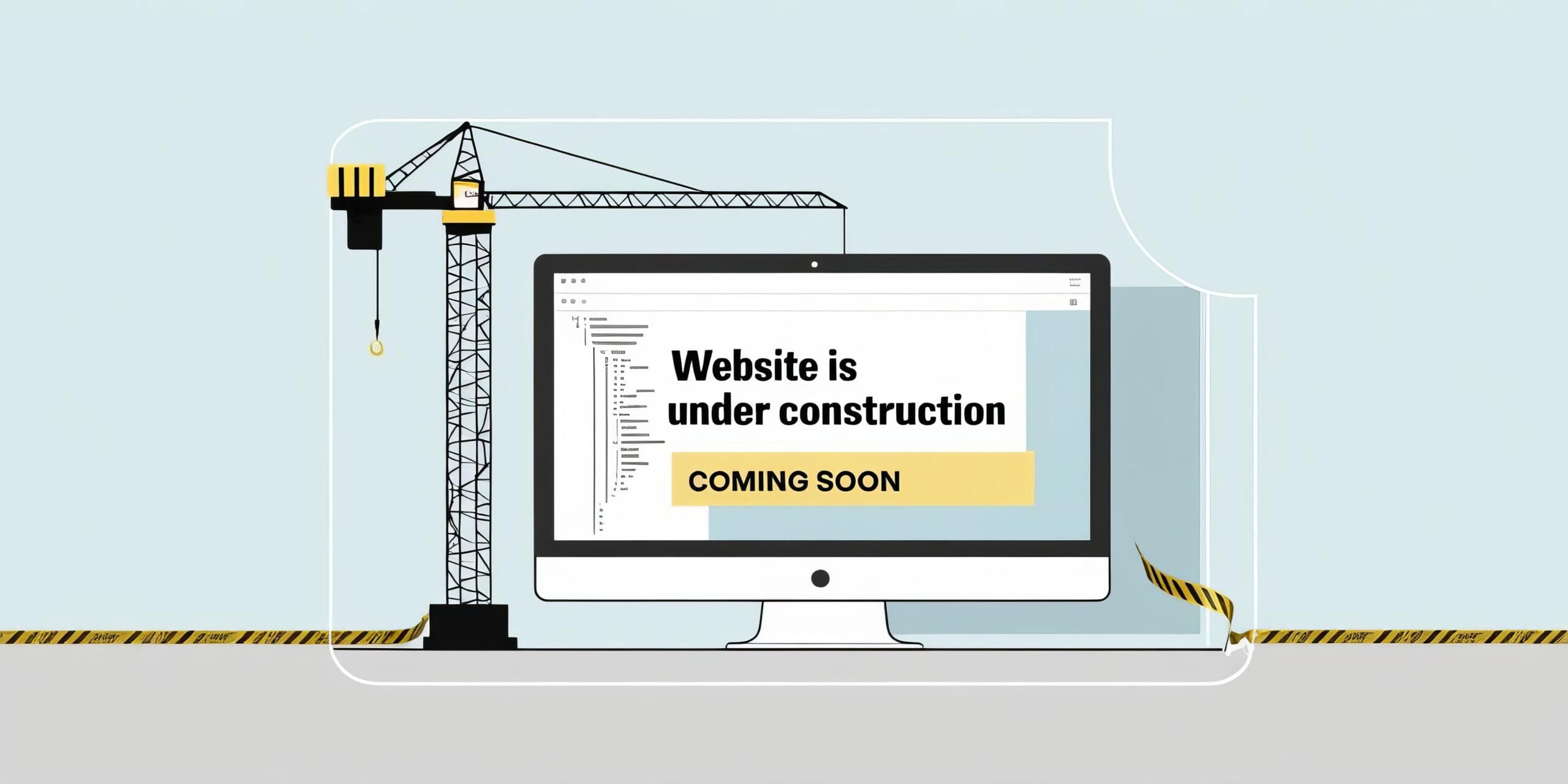
Why “Coming Soon” Pages Hurt Brand Credibility
A “coming soon” page sounds harmless. You put one up while you build the real site, and you plan to swap it out later. But visitors don’t see it as a neutral placeholder. They see it as a promise you’re not keeping.
If someone clicks through to your brand and gets a page with no real information, no timeline, and nothing useful to do, trust drops fast. And once trust drops, it’s hard to win it back.
This is why “coming soon” pages hurt brand credibility. They create a gap between what the visitor expected and what you delivered.
What a “Coming Soon” Page Really Communicates
Most “coming soon” pages say one thing: the site isn’t ready. But they also imply a few things you may not intend:
- You’re not prepared yet
- You’re not sure what you’re offering
- You may not be real
- You may not follow through
Even if none of that is true, the page gives the visitor no evidence to believe otherwise. People judge brands by what they can verify in seconds, not by what the brand meant.
The Expectation Problem
A visitor doesn’t land on your site by accident. They got there because they were curious, interested, or ready to take action. Maybe they searched your name, clicked an ad, or followed a link from social media.
And then they hit a dead end.
That moment matters because it changes the story in their head. Instead of “this looks legit,” it becomes “this feels unfinished” or “this feels risky.” If the page sits there for weeks with no update, the damage compounds. It starts to look like neglect, not planning.
Why It Feels Like a Trust Issue, Not a Timing Issue
A lot of brands assume the problem is patience. They think visitors will come back later.
Most people don’t.
Not because they’re impatient, but because the page gives them no reason to return. If you don’t provide context, proof, or value, you’re asking for trust without earning it. That’s a hard sell in any market.
And if a visitor is comparing options, your “coming soon” page makes their decision easy. They move on to the competitor who looks ready.
How “Coming Soon” Pages Can Create Real Business Problems
This isn’t just about a bad first impression. These pages can create downstream issues that are harder to fix later.
You lose potential customers at the exact wrong time
Interest has a short shelf life. If a visitor is ready to learn more and your site has nothing to offer, you waste that moment.
You invite skepticism
If there’s no address, no proof, no team info, no timeline, and no clear message, some visitors will assume the brand isn’t legitimate. That’s especially true in industries where scams are common.
You damage word of mouth before you launch
People share what they see. If someone visits your site and it feels empty, they may tell others “they’re not live yet” or “it looks sketchy.” That becomes part of your early reputation.
The SEO Reality
A basic “coming soon” page can also create search problems.
Search engines want pages that help users. A placeholder with thin content doesn’t do much. If it’s the only page available, it can limit how your site is understood and indexed.
And if you block search engines entirely while you wait, you lose time. You’re delaying discovery and giving competitors more space to dominate the terms you eventually want to rank for.
This isn’t about “penalties” in a dramatic sense. It’s about missed opportunities and weak signals. If the first version of your site gives search engines nothing helpful, you’re starting behind.
Common Mistakes That Make It Worse
Some “coming soon” pages are bad because they’re empty. Others are bad because they’re trying too hard while still saying nothing.
Here are the mistakes that usually cause the most damage:
- Vague headlines like “Something big is coming” with no explanation
- No timeline, no launch window, and no update cadence
- No proof you’re real, such as a team name, business details, or history
- A signup form with no reason to sign up
- Stock visuals that feel generic, making the brand feel interchangeable
- A page that sits unchanged for weeks, which reads like abandonment
What to Do Instead
If you need a temporary page, make it worthwhile. The goal isn’t to “tease.” The goal is to build confidence while you finish the build.
A better approach usually includes:
1. Explain what the business is in plain language
In one or two sentences, tell people what you do and who it’s for. No buzzwords.
2. Give the visitor something real
That could be:
- a short FAQ
- a simple service overview
- a screenshot or preview
- a founding story that explains why you exist
3. Offer a clear next step
If you ask for an email, tell them what they’ll get and how often. If you want calls, provide a contact option that feels legitimate.
4. Add proof
Proof doesn’t have to mean testimonials. For a new brand, proof can be:
- a real company name
- a real location (even just city and state)
- a real email address
- a real founder name
- links to active social profiles that show consistent activity
5. Keep it updated
If you’re going to keep the page live, update it. A simple date and short progress note go further than people think.
When a “Coming Soon” Page Makes Sense
There are cases where a “coming soon” page is fine. But it has to be intentional.
It works when:
- you’re building interest for something with a clear launch window
- you already have an audience that trusts you
- the page provides real context and a reason to come back
If none of those are true, a placeholder page is usually a net negative.
The Bottom Line
A “coming soon” page isn’t just a temporary sign. It’s often the first real interaction someone has with your brand.
If that interaction feels empty, unclear, or stale, credibility takes a hit. And in a competitive market, people don’t wait around for brands to look ready.
If you need a pre-launch page, make it practical. Give visitors enough information to believe you’re real, and enough value to justify their attention. That’s how you protect credibility before you even launch.