
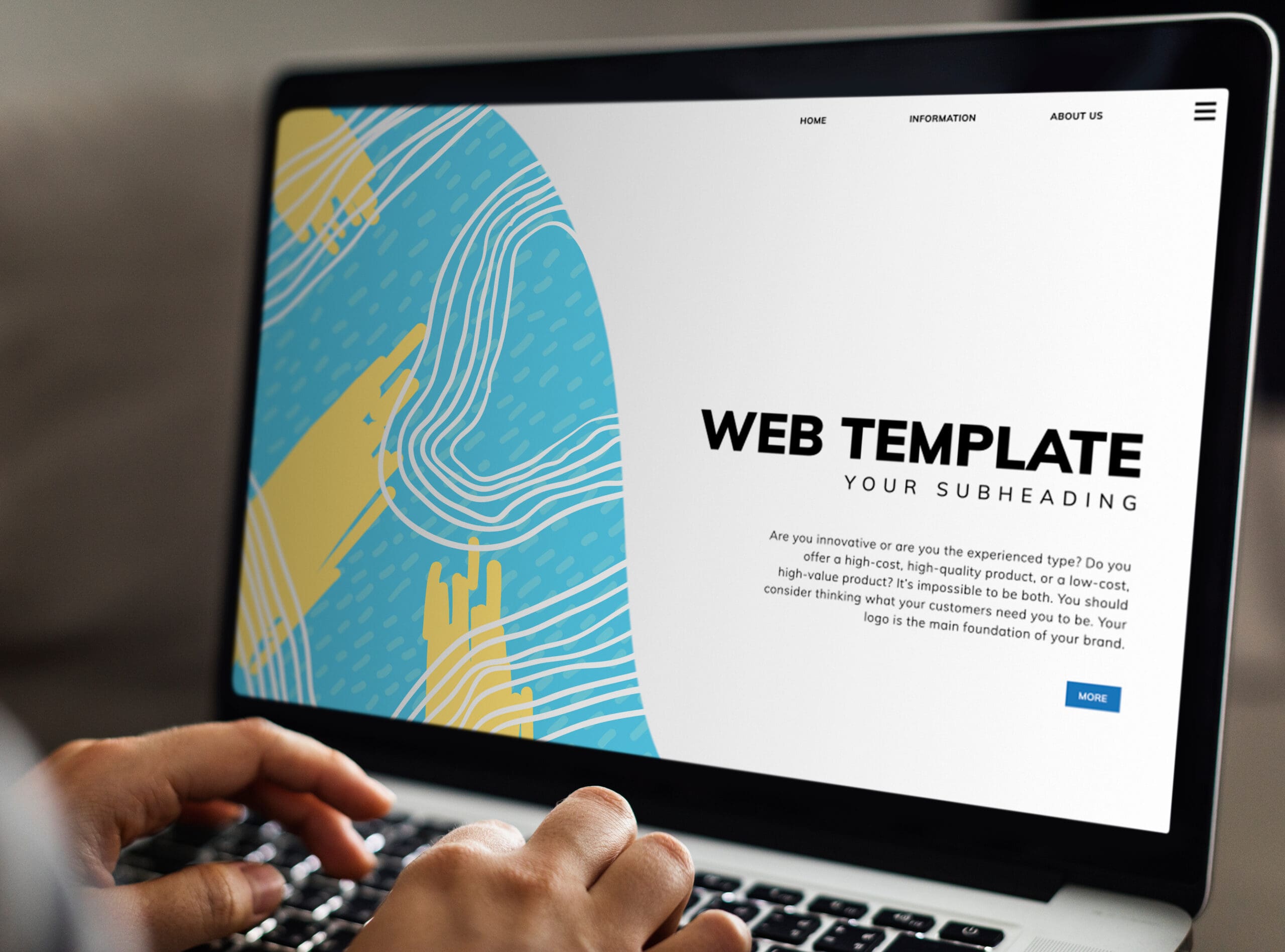
Why Template Websites Reduce Trust
People decide whether to trust your site in seconds.
That judgment happens before a headline is read or a CTA is noticed.
When a website looks templated, visitors sense it immediately. The layout feels familiar. The copy feels interchangeable. As a result, the experience feels low-effort. Trust drops before the content has a chance to do its job.
This reaction isn’t emotional. Instead, it’s learned behavior.
Template footprints signal shortcuts. Over time, shortcuts train users to be cautious.
What Template Footprints Really Are
Template footprints are visible and invisible markers that indicate a site was built from a prepackaged layout with minimal customization.
They tend to appear as:
- Identical page structures across unrelated sites
- Stock layouts with default spacing and hierarchy
- Boilerplate copy that reads like it was filled in
- Predictable section order tied to common builders
In short, the site doesn’t feel designed. Rather, it feels assembled.
That distinction matters more than most teams realize.
Why Humans Notice Them Instantly
People don’t consciously analyze HTML or CSS. Instead, they pattern-match.
When visitors see a layout they’ve encountered dozens of times, their brain flags it as familiar. Unfortunately, familiarity here doesn’t create comfort. It creates doubt. Familiar quickly becomes replaceable, and replaceable feels risky.
Because of this, template-heavy sites often suffer from:
- Higher bounce rates
- Shorter session times
- Lower conversion confidence
The site doesn’t feel wrong.
However, it also doesn’t feel worth trusting.
The Trust Problem Isn’t Design — It’s Signaling
A templated site sends quiet signals whether you intend it to or not.
It suggests limited investment. It implies sameness. More importantly, it raises the question of what else might be generic.
For professional services, SaaS, healthcare, finance, or any business involving money or personal data, that signal is damaging.
Users don’t separate design quality from business quality. Consequently, if the site feels interchangeable, the company feels interchangeable too.
Why Search Engines Don’t Like Template Footprints Either
Search engines look for many of the same signals users do. Patterns matter.
When multiple sites share identical structures, copy blocks, and markup, algorithms interpret them as low-differentiation assets. Even if the content is technically original, the presentation isn’t.
Because of that, template footprints can lead to:
- Reduced crawl priority
- Duplicate-content proximity issues
- Weaker engagement signals
- Lower long-term rankings
Search engines reward distinctiveness because it correlates with value. Templates flatten that signal.
When Templates Cross Into “Spammy”
Templates themselves aren’t the problem. Unmodified templates are.
A site crosses the line when headings repeat across pages, images feel decorative, CTAs sound generic, and page flow mirrors known builders exactly.
At that point, the site no longer feels like a real business presence. Instead, it feels disposable.
That’s when trust collapses.
Professionalism Suffers First
For consultants, agencies, law firms, and service providers, template footprints do real damage.
Clients expect custom thinking. They expect judgment. They expect care.
A generic site suggests none of those things. Even subtle template markers can trigger doubt. Once that doubt appears, the sale becomes harder—sometimes impossible.
Common Template Footprints Users Pick Up On
You don’t need a technical audit to spot them. Users notice:
- Recycled hero sections with vague promises
- Identical testimonial layouts across industries
- Predictable “Why Choose Us” blocks
- Overused icon sets and spacing patterns
Individually, these elements might seem harmless. Taken together, however, they send a clear message: this wasn’t built for me.
Why “Good Enough” Customization Still Fails
Swapping colors and logos isn’t customization. Changing fonts doesn’t create identity.
If the structure, rhythm, and language remain untouched, the footprint remains. Real trust comes from content written for a specific audience, page flows designed around real intent, and hierarchy shaped by meaning rather than defaults.
Anything less is cosmetic.
Real-World Consequences
Template-heavy sites don’t just look weaker. They perform poorly.
They struggle with lead quality, referral confidence, brand recall, and return visits. Worse still, they’re easier to ignore. Users forget them because there’s nothing distinctive to remember.
Trust doesn’t fail loudly here. Instead, it never forms.
How to Remove Template Footprints Without Rebuilding Everything
You don’t need to start from scratch. You need to break the patterns.
Begin by rewriting the section copy so it couldn’t belong to another company. Then reorder page structures to match how users actually think. Finally, introduce one or two unmistakable moments per page.
The goal isn’t to be flashy.
Rather, it’s to be intentional.
The Long-Term Advantage of Looking Intentional
Custom sites don’t just convert better. They age better.
They’re harder to confuse with competitors. They’re harder to spoof. Most importantly, they’re easier to trust.
In crowded markets, that signal does more work than any badge, claim, or slogan ever could. Once users trust you, everything else gets easier.